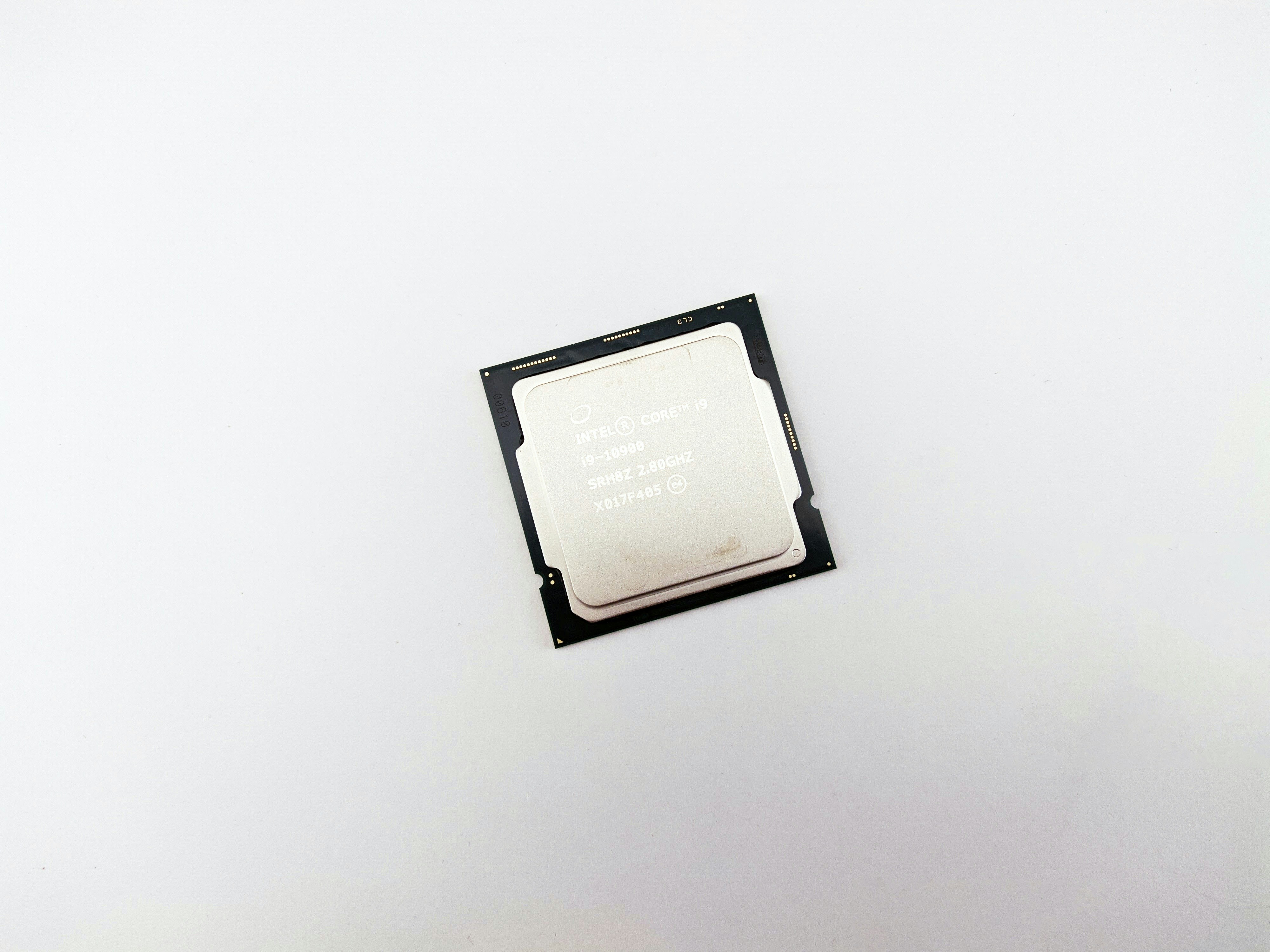
Introduction to the Central Processing Unit
The Central Processing Unit (CPU) serves as the fundamental component of a computer, often referred to as its brain. It is primarily responsible for executing instructions and managing data flow, making it crucial for the overall performance of any computing device. The CPU performs a variety of tasks which include arithmetic calculations, logic operations, control tasks, and data management. This essential processing unit interprets and executes commands from both hardware and software, enabling the computer to function accurately and efficiently.
At the heart of the CPU is a complex architecture composed of multiple cores, which allows it to handle several tasks simultaneously. Modern CPUs often contain multi-core configurations, meaning they can perform multiple operations in parallel, ultimately enhancing the speed and efficiency of processing. Each core is capable of executing sequences of instructions independently, which is particularly advantageous in executing multithreaded applications and performing complex computations quickly.
In addition to its core functions, the CPU relies on cache memory to speed up data access. Cache memory holds frequently accessed information, allowing the CPU to retrieve data more quickly than if it had to access the main memory. This reduces latency and improves overall system performance. Furthermore, the CPU interfaces with other critical components—such as the memory, storage, and input/output devices—through a well-defined architecture, ensuring smooth communication and data flow between these elements.
Overall, the CPU is an indispensable part of a computer system, as it directs and processes the basic functions that define computing tasks. Understanding the role of the Central Processing Unit is fundamental for anyone looking to delve deeper into computer architecture or enhance their technology literacy.
History of CPU Development
The evolution of the Central Processing Unit (CPU) represents a remarkable journey through the history of computing technology. The origins of the CPU can be traced back to the early 20th century with the invention of the vacuum tube. In the 1940s, the first electronic computers, such as the ENIAC, utilized vacuum tubes to perform calculations. While revolutionary at the time, these systems were large, cumbersome, and inefficient, consuming significant amounts of power.
The transition from vacuum tubes to transistors in the 1950s marked a significant advancement in CPU development. Transistors allowed for more compact designs, greater reliability, and reduced power consumption. This era saw the emergence of the first commercially available processors, such as the Intel 4004, introduced in 1971. The 4004 was a 4-bit microprocessor which laid the foundation for subsequent CPU innovations.
In the subsequent decades, the advent of integrated circuits enabled the creation of smaller, faster, and more powerful processors. The introduction of the 8-bit microprocessor architecture, followed by 16-bit and 32-bit designs, catalyzed the rapid development of home computers during the 1980s. The initial competition between Intel and AMD has propelled the field forward, leading to significant milestones such as the launch of the Pentium series that established a new standard for performance.
The late 1990s and early 2000s ushered in the era of multi-core processors, enabling CPUs to perform multiple tasks simultaneously, a necessity for the increasingly complex applications of the digital age. As technology continues to evolve, CPUs now feature advanced technologies such as hyper-threading, integrated graphics, and energy-efficient designs that cater to modern computing demands.
Throughout this history, each innovation in CPU design has fundamentally altered the capabilities of computers, increasing their efficiency and performance. This relentless progress in CPU technology underscores its pivotal role as the brain of computers, driving advancements in various fields ranging from personal computing to artificial intelligence.
Components of the CPU
The Central Processing Unit (CPU) is often referred to as the brain of a computer, and it comprises several critical components that work cohesively to process instructions. Among these primary components are the Arithmetic Logic Unit (ALU), the Control Unit (CU), and various registers. Each of these elements plays a vital role in the CPU’s functionality, contributing to its overall efficiency and performance.
The Arithmetic Logic Unit is responsible for executing arithmetic operations, such as addition, subtraction, multiplication, and division, as well as logical operations, including comparisons and boolean functions. It performs these calculations based on binary input and outputs the results in a format that the computer can further process. The ALU acts as a fundamental building block for any computational tasks carried out by the CPU, ensuring that mathematical and logical functions are executed accurately and efficiently.
<pin a="" alu="" alu,="" and="" between="" by="" components="" components.="" control="" cpu="" crucial="" data="" decodes="" directing="" effectively="" ensure="" execution="" flow="" from="" in="" instructions="" interaction="" it="" managing="" memory,="" of="" operation.
Registers are small, extremely fast storage locations within the CPU that temporarily hold data, instructions, and addresses. These components are crucial for the CPU’s performance, as they provide immediate access to frequently used data without the delays associated with retrieving information from primary memory. Different types of registers, including data registers, instruction registers, and address registers, serve specific functions and enhance the efficiency with which the CPU processes information.
In summary, the CPU consists of multiple interrelated components, including the Arithmetic Logic Unit, Control Unit, and registers, which collectively facilitate the execution of instructions and perform essential computational tasks. Understanding these components is fundamental to grasping how a CPU operates and processes information. Regular advancements in CPU design continue to improve their efficiency and effectiveness in executing complex operations.
How the CPU Processes Information
The central processing unit (CPU) is a critical component of any computer system, responsible for executing instructions and processing information. At the heart of the CPU’s functionality lies a fundamental process known as the fetch-decode-execute cycle. This cycle encompasses three main stages: fetching the instruction from memory, decoding the instruction to determine the necessary actions, and executing those actions to manipulate data.
In the first phase, fetching, the CPU retrieves an instruction from the memory. This instruction is located at a specific address in the memory and is brought into the CPU for further processing. The program counter, a special register, plays a vital role by keeping track of the address of the next instruction to be executed. As the CPU fetches the instruction, it is temporarily stored in the instruction register.
Following the fetch phase is the decode phase. Here, the CPU interprets the fetched instruction to understand what action needs to be taken. This involves breaking down the instruction into manageable parts and identifying the operands and the required operation. The control unit, a crucial part of the CPU, orchestrates this decoding process, ensuring that the correct pathways and resources are activated for subsequent actions.
The final phase is the execution phase, where the instruction’s decoded actions are carried out. This can involve performing arithmetic or logical operations, manipulating registers, or interacting with memory to read or write data. Once the execution is complete, the results are stored back in the appropriate memory location or register, and the CPU proceeds to the next instruction by returning to the fetch stage.
Overall, the fetch-decode-execute cycle is an essential mechanism that highlights how the CPU processes information, enabling users to perform various tasks seamlessly. Understanding this cycle enhances comprehension of computer operations and the integral role the CPU plays in overall system performance.
Performance Metrics: Clock Speed and Cores
The performance of a CPU, often referred to as the brain of a computer, is predominantly determined by two key metrics: clock speed and the number of cores. Clock speed, measured in gigahertz (GHz), indicates how many cycles a CPU can perform per second. A higher clock speed generally leads to faster processing, as it allows the CPU to execute more instructions in a given timeframe. This is particularly crucial for tasks requiring quick computations, such as gaming or real-time data processing.
However, the significance of clock speed is nuanced by the architecture of the CPU and its core count. The number of cores refers to the individual processing units within a CPU. Modern CPUs often feature multiple cores, allowing simultaneous processing of multiple tasks. This architecture enhances the efficiency of computation, particularly for multi-threaded applications that can distribute workloads across various cores. For instance, video editing software and graphic design applications often benefit from this capability, resulting in improved performance when utilizing multiple cores compared to a single-core processor.
When comparing single-core versus multi-core processing, it is essential to consider the nature of the applications in use. Single-core processors may excel in straightforward tasks where high clock speed is advantageous, while multi-core processors thrive in scenarios requiring parallel processing capabilities. Consequently, consumers must assess their computational needs before purchasing a CPU, balancing clock speed and core count to achieve optimal performance.
In summary, both clock speed and the number of cores are critical determinants of CPU performance. A thorough understanding of these metrics can assist users in making informed decisions when selecting a processor that aligns with their computing requirements, ultimately enhancing their overall experience.
The Role of Cache Memory
Cache memory serves a critical function in enhancing CPU performance by providing quick access to frequently used data and instructions. It acts as a high-speed intermediary between the main memory (RAM) and the CPU, significantly improving the efficiency of data retrieval processes. The multi-level cache architecture typically employs three distinct levels: L1, L2, and L3, each with unique characteristics and purposes.
The Level 1 (L1) cache is the smallest and fastest memory cache, located directly on the CPU chip. It is designed to store frequently accessed data that the processor requires immediately. The swift access times of the L1 cache, usually measured in nanoseconds, allow for rapid data retrieval and execution, minimizing delays during processing. Generally, L1 cache is divided into two separate sections: one for data (L1d) and one for instructions (L1i), ensuring that both types of information are readily available to the CPU.
Moving outward, the Level 2 (L2) cache is larger than the L1 cache but slightly slower in terms of access speed. It is typically situated on the CPU chip or slightly off-chip, depending on the architecture. The L2 cache serves as a reservoir for data that is less frequently accessed than that stored in L1 but still requires quick retrieval. The capacity of L2 caches can vary, but they often provide several megabytes of storage, striking a balance between speed and size.
The Level 3 (L3) cache, commonly shared among the cores of multi-core processors, is the largest and the slowest of the three. This cache significantly reduces the time the CPU spends waiting for data from the main memory by effectively storing larger datasets and instructions. By improving the efficiency of data access, L3 cache plays a vital role in making the overall system more responsive and capable of executing complex processes without considerable lag.
Modern CPU Architectures
The evolution of CPU architectures has played a pivotal role in the advancement of computing technology. Two of the most prominent contemporary CPU architectures are Intel’s x86 and ARM, each embodying distinct design philosophies that cater to varying applications and performance requirements. The x86 architecture, developed by Intel, has become the prevailing choice for desktops and laptops due to its robust performance capabilities. It is characterized by its complex instruction set computing (CISC), which allows for a wide array of instructions, enabling seamless execution of demanding applications.
On the other hand, ARM architecture has gained considerable traction in mobile and embedded systems, primarily due to its energy-efficient design. ARM utilizes a reduced instruction set computing (RISC) approach, focusing on a smaller set of instructions that allow for simpler and more efficient execution. This design philosophy greatly contributes to lower power consumption, making ARM processors ideal for battery-powered devices like smartphones and tablets.
When comparing these two architectures, performance often plays a crucial role in determining their application. x86 processors dominate in high-performance computing tasks, providing significant processing power for applications that require extensive data manipulation, such as gaming, video editing, and software development. Conversely, ARM processors excel in environments where power efficiency is paramount. This has led to their widespread use in Internet of Things (IoT) devices and wearable technology, where minimizing energy consumption is essential for longevity.
The choice between x86 and ARM ultimately depends on the specific needs of a computing environment. With technological advancements continuing to evolve both architectures, understanding their fundamental differences—encompassing performance, power consumption, and application suitability—is vital for selecting the appropriate CPU for any given task.
Future Trends in CPU Technology
The landscape of CPU technology is evolving rapidly, with several emerging trends indicating a significant transformation in computing capabilities. One of the most promising advancements is quantum computing. Unlike traditional CPUs that process data in binary forms (0 and 1), quantum CPUs leverage quantum bits (qubits) that can exist in multiple states simultaneously. This attribute has the potential to exponentially increase processing power, enabling computations that are currently infeasible. Researchers are actively exploring how quantum CPUs can revolutionize fields such as cryptography, complex simulations, and optimization problems.
Another exciting area is neuromorphic computing, which mimics the neural structure and functioning of the human brain. Unlike conventional CPUs that rely on sequential processing, neuromorphic architectures process information in a parallel manner, leading to potentially higher efficiency in tasks related to machine learning and artificial intelligence. By utilizing spikes of electrical activity similar to neuron firing, these systems can transform the way data is processed, potentially paving the way for more intelligent systems that can learn from their environment in real time.
As environmental concerns rise, advancements in energy efficiency have become increasingly paramount in CPU development. Manufacturers are focusing on creating chips that can deliver higher performance while consuming less power. Techniques such as dynamic voltage and frequency scaling (DVFS) allow CPUs to adjust their power usage based on workload demands, significantly improving energy efficiency. Additionally, innovations in semiconductor materials, such as the use of graphene and other 2D materials, hold promise for producing CPUs that are both powerful and energy-conscious.
Overall, the convergence of quantum computing, neuromorphic architectures, and improved energy management signifies a pivotal shift in CPU technology. These advancements not only promise to enhance computational capabilities but also aim to address the pressing challenges of energy consumption and sustainability within the tech industry.
Conclusion: Why the CPU is Essential
The Central Processing Unit (CPU) serves as the essential brain of any computing system, orchestrating a multitude of tasks that power modern technology. This integral component has undergone significant evolution since its inception, transitioning from simple mechanical devices to complex microprocessors with billions of transistors. The advancements in CPU technology have not only increased speed and efficiency but have also expanded the possibilities for computing, enabling the development of sophisticated applications that impact various fields, including science, business, and entertainment.
As computers have become more advanced, the role of the CPU has only magnified. It manages all operations within the computer, from executing instructions to processing data and managing peripherals. The performance of a system is heavily reliant on the capabilities of its CPU, making it a critical factor in choosing the right hardware for specific tasks. In tasks ranging from gaming to data analysis, a powerful CPU can significantly enhance user experience and productivity.
Moreover, as technology continues to evolve, the role of the CPU adapts to new challenges. Innovations such as multicore processing, energy efficiency improvements, and integration with artificial intelligence capabilities represent a few of the ways the CPU remains at the forefront of technological advancement. It acts as a facilitator for the digital age, enabling better performance, higher data throughput, and improved multitasking.
Ultimately, the CPU’s continuing importance in computing cannot be overstated. As we look toward the future, the brain of our computers will play an indispensable role in shaping the advancements that lie ahead, pushing the boundaries of what we can achieve through technology. Understanding the significance of the CPU allows for informed decisions when investing in computing technology, ensuring that users can fully harness the power of their devices.