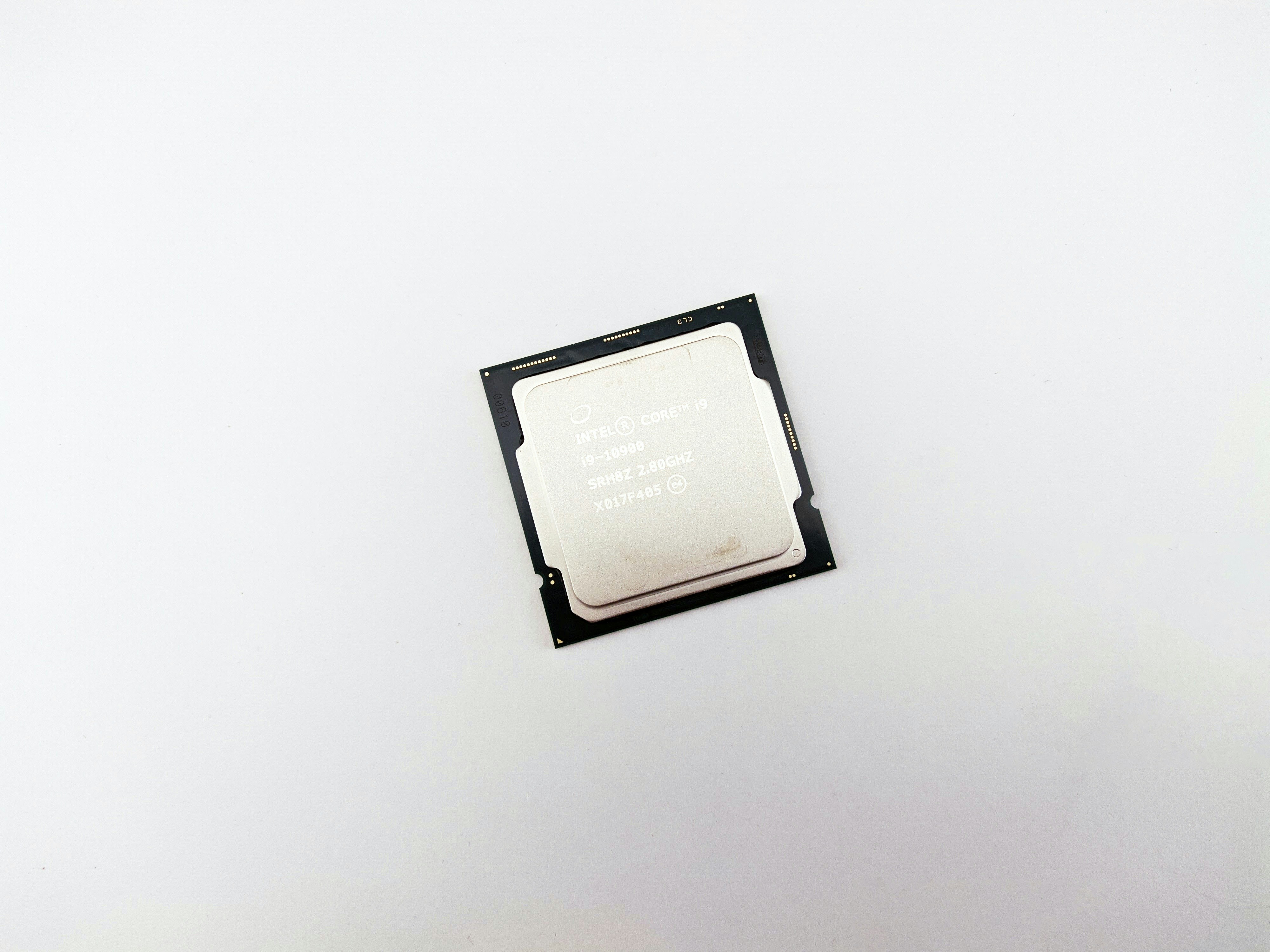
Understanding CPU Processing
A Central Processing Unit (CPU) is often described as the brain of a computer. It is responsible for interpreting and executing instructions, which enables a computer to perform various tasks. The CPU processes data by following a series of complex operations that involve fetching, decoding, and executing instructions from memory. This fundamental function is essential for the overall performance and efficiency of a computing system.
At the core level, the CPU consists of multiple components that work in harmony to handle computing tasks. The Arithmetic Logic Unit (ALU) performs mathematical calculations and logical operations, while the Control Unit (CU) directs the operation of the processor by managing the flow of data between the CPU and other components of the system. Additionally, registers are small storage locations within the CPU that hold data temporarily during processing, allowing for rapid access and manipulation.
When a CPU receives an instruction, it follows a systematic approach to execute it. First, the CPU fetches the instruction from the memory, identifying its location. Once retrieved, the instruction is decoded to determine the action required. This process involves translating the binary code of the instruction into a language that the CPU can understand. Following successful decoding, the CPU executes the operation, which may involve performing calculations, moving data, or controlling peripheral devices.
Overall, the CPU’s role in a computing environment is integral to how instructions are processed. Understanding this role provides a foundation for exploring the complexities of CPU function, including its architecture, performance metrics, and advances in technology. As computing demands evolve, the efficiency and capabilities of the CPU continue to play a crucial role in meeting these requirements.
The Role of the CPU in a Computer System
The Central Processing Unit (CPU) serves as the fundamental component of a computer, functioning as the brain that interprets and executes instructions from both software and hardware. Each CPU consists of several integral components, including the arithmetic logic unit (ALU), control unit, and registers, which collectively manage the processing of tasks. Its responsibilities also extend to managing communication with memory, storage devices, and input/output (I/O) devices, thus establishing the CPU’s pivotal role within the computer architecture.
The interaction of the CPU with memory is critical for efficient processing. The CPU retrieves instructions and operands from the main memory (RAM) through a series of bus lines. It is equipped with a cache system, a smaller but faster memory located directly on or near the CPU, which temporarily holds frequently accessed data to enhance processing speed. The presence of caches significantly reduces the time needed for the CPU to fetch data, hence improving the overall performance of the computer system.
In addition to interfacing with memory, the CPU also coordinates operations with storage devices such as hard drives and solid-state drives. This interaction is vital for data retrieval and storage, ensuring that information can be quickly accessed and processed. Furthermore, the CPU communicates with I/O devices, including keyboards, mice, and printers, enabling user interactions and peripheral operations. Through its comprehensive interaction with these components, the CPU orchestrates the execution of programs, ensuring that tasks are carried out in an orderly and timely fashion.
Overall, the CPU’s role is indispensable in a computer system. Its capacity to interpret and execute a myriad of instructions shapes the entire computing experience, making it essential for efficient operation and management of tasks across various applications.
Understanding Machine Language and Instructions
Machine language, often referred to as machine code, is the most fundamental level of programming language that a Central Processing Unit (CPU) can directly understand and execute. It consists of binary code, which is a series of 0s and 1s, representing various commands and operations that the CPU is capable of processing. Machine language serves as the foundation for all higher-level programming languages, as it provides the necessary instructions that hardware components rely on to perform tasks. Each instruction in machine code is executed by the CPU, which serves as the brain of any computing system.
Instructions in machine language can be categorized into various types, including arithmetic operations, logic operations, control flow instructions, and data transfer instructions. For instance, arithmetic instructions such as addition and subtraction allow the CPU to perform mathematical computations, while logic instructions enable decision-making processes through logical operators like AND and OR. Control flow instructions, such as jumps and branches, direct the sequence of instruction execution, allowing for programmatic flexibility.
Moreover, data transfer instructions are essential for moving data between the CPU, memory, and input/output devices. An example of this is the ‘move’ instruction, which transfers data from one location to another, thus facilitating communication between different system components. These basic operations form the core of how a CPU interprets instructions and executes them in the processing cycle.
Through a combination of these different instruction types, machine language allows the CPU to efficiently manage tasks ranging from simple calculations to complex data processing operations, thus playing a pivotal role in the overall functionality of computing devices.
The Instruction Cycle: Fetch, Decode, Execute
The instruction cycle is fundamental to how a Central Processing Unit (CPU) operates, encompassing three primary stages: fetch, decode, and execute. This logical sequence allows the CPU to process commands efficiently, ensuring that tasks are carried out in a systematic manner. Each stage plays a crucial role in transforming high-level instructions into actionable operations.
The first phase, fetching, involves retrieving the instruction from the memory. The CPU uses the Program Counter (PC) to keep track of the memory address of the next instruction to be executed. Once the address is determined, the CPU sends a request to memory, retrieves the instruction, and then the PC is incremented to point to the subsequent instruction. This process is crucial as it lays the foundation for the subsequent phases by ensuring the correct instructions are available for processing.
Next comes the decoding phase. During this stage, the fetched instruction is interpreted by the Control Unit (CU) of the CPU. The CU identifies the operation that needs to be performed, which may involve various components of the CPU and data pathways. The decoding process converts the instruction into a format that the CPU can understand. This often includes translating the instruction into control signals that guide other hardware components in executing the command. Effective decoding is essential, as any errors here can lead to incorrect processing.
Finally, the execute phase involves the carrying out of the decoded instruction. This may require arithmetic or logical operations, data movement between registers or memory, and interactions with I/O devices. Once the operation is complete, the results may update registers, system memory, or output devices. This final step culminates the instruction cycle and prepares the CPU for the next fetch phase. Understanding this cycle not only reveals how CPUs execute instructions but also sheds light on the intricacies involved in modern computing.
Interpreting Instructions: The Role of the Control Unit
The Control Unit (CU) serves as a pivotal component within the Central Processing Unit (CPU), responsible for interpreting instructions and directing the flow of data during program execution. Upon receiving an instruction, the CU analyzes it and determines the necessary operations needed to execute the command. This interpretation is integral to ensuring that the various parts of the CPU communicate effectively and function harmoniously.
Upon fetching an instruction from memory, the CU decodes it to identify the specific operations that must be carried out. This decoding process encapsulates understanding the instruction format, which includes the operation code, known as the opcode, and any operands that may be necessary for the operation. The precision with which the CU decodes these instructions directly influences the overall efficiency of processing. Consequently, the CU must efficiently relay signals to other components within the CPU, particularly to the Arithmetic Logic Unit (ALU) and memory management.
The relationship between the CU and the ALU is crucial. The CU instructs the ALU on what operations to perform—including arithmetic calculations and logical operations—thus enabling the CPU to execute complex tasks. Furthermore, the CU plays a role in coordinating data movement between the CPU and memory. This involves sending requests for data and retrieving results, which are essential for executing subsequent instructions. Through these interconnections, the CU helps maintain a constant cycle of fetching, decoding, and executing instructions.
By effectively interpreting instructions and managing the CPU’s internal operations, the Control Unit not only ensures the smooth execution of tasks but also contributes to the overall speed and efficiency of computing processes. As computing technology evolves, the importance of the CU’s role remains a fundamental aspect of CPU architecture, emphasizing its significance in the realm of instruction interpretation and execution within computing systems.
The Role of Registers in CPU Processing
Registers are high-speed storage locations within the Central Processing Unit (CPU) that play a crucial role in the processing of data and instructions. They are designed to facilitate fast access to data, allowing the CPU to operate efficiently while executing tasks. Unlike cache memory or main memory, registers are limited in number but are essential for optimizing CPU performance during processing cycles.
There are several types of registers within a CPU, each with specific functions. The most common types include the accumulator, data registers, address registers, and instruction registers. The accumulator is primarily responsible for holding intermediate arithmetic and logic results, enabling rapid computations. Data registers temporarily store data being processed, while address registers hold memory addresses that indicate where data is stored. The instruction register, on the other hand, holds the current instruction that the CPU is executing, enabling it to decode and execute operations efficiently.
The importance of registers in CPU processing cannot be overstated. As the CPU fetches instructions from memory, it often needs to perform operations on data. Registers provide a means to store this data close to the processing unit, significantly enhancing the speed at which operations can be executed. Without this rapid access to registers, the CPU would be required to interact more frequently with slower memory storage, leading to increased latency in processing tasks.
Additionally, the use of registers minimizes the overall number of data transfers required between the CPU and memory. This efficiency is vital in modern computing systems, where processing speed directly impacts performance. Therefore, the effective utilization of registers is fundamental to achieving optimal CPU performance, making them an integral component in the architecture of CPU systems.
Pipelining: Enhancing Processing Efficiency
Pipelining is a crucial technique in modern CPU architecture that significantly enhances processing efficiency. The concept revolves around the simultaneous execution of multiple instructions, which is accomplished by breaking down the instruction execution process into various stages. This segmented approach enables the CPU to work on different instructions concurrently, rather than executing one instruction at a time. Each stage of the pipeline corresponds to a specific phase in the instruction cycle, such as instruction fetch, decode, execute, and write-back. As a result, while one instruction is being executed, another can be decoded, and yet another can be fetched, effectively maximizing resource utilization.
The benefits of pipelining in CPU performance are substantial. With the ability to execute several instructions at various stages of completion, the overall throughput of the CPU is greatly enhanced. This leads to reduced instruction latency, allowing for faster execution of programs and improved responsiveness in computing tasks. Moreover, as the number of instructions processed per clock cycle increases, pipelining contributes to a significant increase in the instruction per cycle (IPC) metric, which is a key indicator of processor performance.
However, pipelining is not without its challenges. It introduces complexity in design and requires careful handling of hazards. Data hazards occur when instructions depend on the results of prior instructions in the pipeline, potentially leading to delays. Control hazards arise from branching instructions, which can disrupt the flow of execution. To mitigate these issues, CPU designs often incorporate techniques such as instruction scheduling and branch prediction. While these strategies can enhance pipeline efficiency, they also add to the design’s complexity. In summary, pipelining represents a significant advancement in CPU architecture, balancing the benefits of increased instruction throughput with the challenges associated with seamless and efficient execution.
Multicore Processors and Concurrent Processing
The evolution of CPUs has brought forth the development of multicore processors, which have significantly enhanced processing capabilities. Unlike traditional single-core processors, multicore processors consist of multiple processing units (or cores) within a single physical package. Each core is capable of executing instructions independently, allowing the processor to handle multiple tasks simultaneously. This architecture supports efficient processing by dividing workloads among the available cores, making it a critical advancement in the realm of computer technology.
One of the main advantages of multicore processing is concurrent processing. With the ability to execute multiple threads at the same time, multicore processors improve overall performance, especially in applications designed to leverage parallel processing. For instance, modern software applications in areas such as video editing, gaming, and data analysis are increasingly optimized to take advantage of the parallel execution capabilities provided by multiple cores. This leads to faster execution times and more fluid user experiences.
<pfurthermore, a="" adept="" also="" applications="" are="" as="" at="" attempting="" between="" bottlenecks="" but="" can="" concurrently,="" core="" cores="" efficiency="" enhances="" handling="" improves="" lag.<pas a="" ability="" advances,="" an="" and="" architecture,="" are="" as="" be="" benefit.="" by="" can="" capitalize="" characterized="" computing,="" concurrent="" continues="" cornerstone="" design="" developers="" development="" enhanced="" ensuring="" equally="" era="" evolve,="" execute="" for="" hardware="" has="" in="" increased="" increasingly="" initiated="" instructions="" interpret="" making="" modern="" multicore="" of="" on="" p="" parallel="" paramount.="" paving="" performance="" philosophies,="" processing="" processors="" productivity.
Future of CPU Processing: Trends and Innovations
The landscape of CPU processing is undergoing significant transformation driven by various emerging technologies. One of the most promising advancements is quantum computing, which leverages the principles of quantum mechanics to perform complex calculations at previously unattainable speeds. Unlike classical CPUs that process data in bits, quantum processors utilize qubits, enabling them to handle multiple states simultaneously. This leap in processing capabilities could profoundly enhance how CPUs interpret instructions, particularly in fields requiring extensive computational resources, such as cryptography, material science, and artificial intelligence.
In addition to quantum processing, another noteworthy trend is the integration of artificial intelligence within CPU architectures. AI-enhanced CPUs are being designed to optimize instruction execution through machine learning algorithms, which can predict the most efficient pathways for data processing. This innovation not only increases performance but also allows for adaptive processing capabilities that can learn from user behavior and operational demands. As a result, CPUs can execute tasks more efficiently, minimizing latency and improving overall system responsiveness.
Furthermore, the ongoing miniaturization of semiconductor technology is paving the way for more powerful and energy-efficient CPU designs. As manufacturers successfully shrink transistor sizes, more cores can be integrated onto a single chip, enhancing parallel processing capabilities. This evolution is pivotal, as modern applications increasingly rely on multi-core processors for better performance. Innovations such as 3D stacking and advanced cooling solutions are also contributing to improved thermal management, allowing CPUs to operate at higher performance levels without overheating.
Looking ahead, we can anticipate that the continuous development of both quantum technologies and AI enhancements will reshape the conventional CPU landscape. As these innovations progress, they promise not only to redefine processing capabilities but also to open new avenues for applications that were previously considered impractical. The intersection of these technologies signifies a new era in CPU processing, where the interpretation of instructions may evolve to meet the demands of increasingly complex computational tasks.